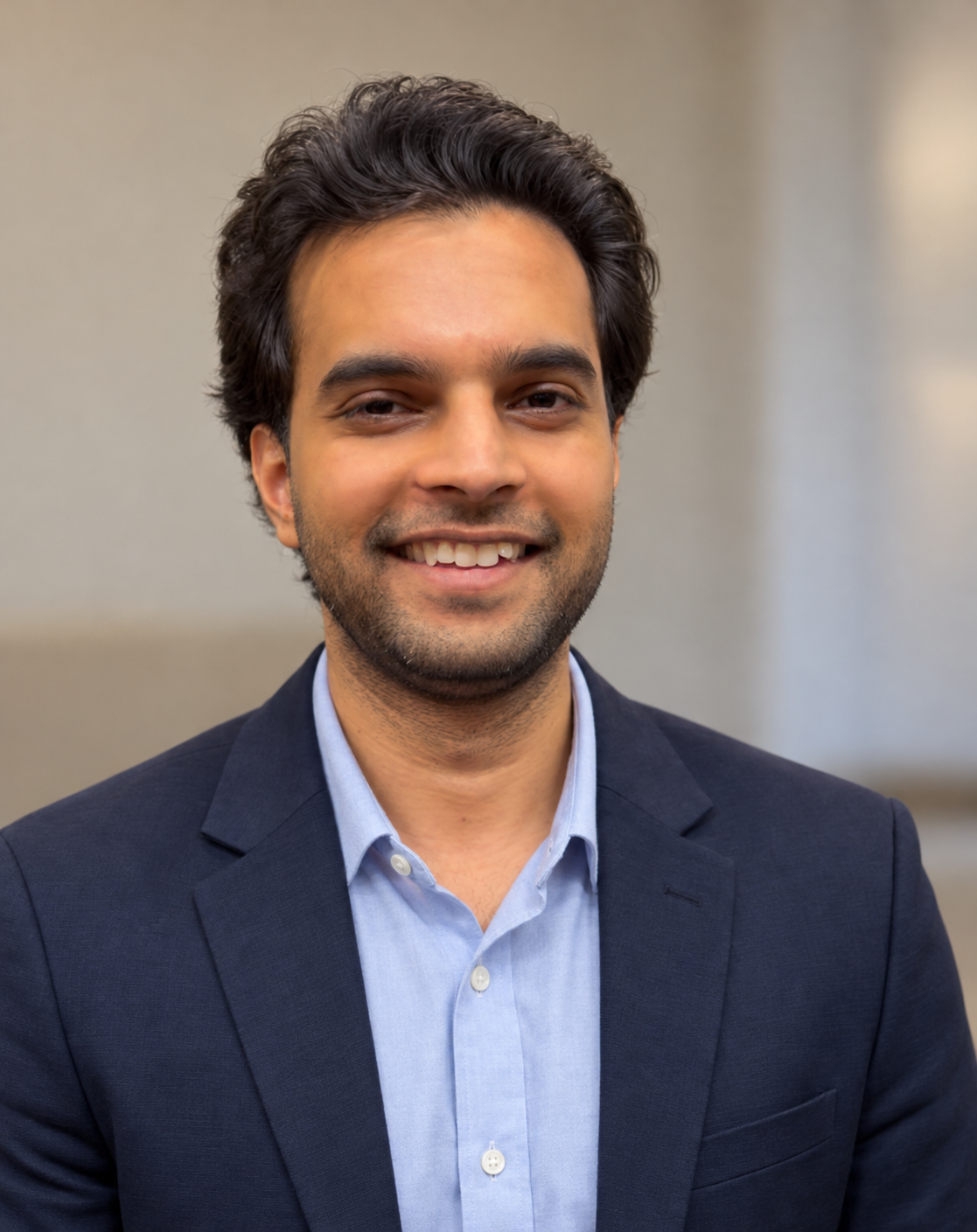
Sushovan Adhikari
Software Engineer | Data & ML Systems.
Building intelligent, scalable applications through the intersection of backend engineering and data science.
View My Work
Building intelligent, scalable applications through the intersection of backend engineering and data science.
View My WorkI am a Software Engineer with a Master’s degree in Data Science and a focus on architecting data-driven systems. My unique combination of advanced theoretical knowledge and practical engineering skills allows me to build scalable, production-ready applications that deliver significant business value through automation and predictive analytics.
I specialize in full-stack development and end-to-end data pipelines, ranging from complex backend architecture to the deployment of machine learning models in production environments. My experience spans various domains, including industrial automation, time-series analysis, and cybersecurity applications.
Master's thesis research investigating the threat of AI-generated phishing emails. Trained an LSTM-CNN model and fine-tuned BERT, achieving 98% and 99% accuracy on human-crafted email datasets. When tested on 711 AI-generated phishing emails, both models misclassified at least 10% as legitimate, revealing critical security risks. Fine-tuning showed BERT (99.48% accuracy) significantly outperformed LSTM-CNN (48.61%). This work highlights the urgent need for stronger cyber defenses against AI-generated threats.
Built a full-stack web application using Django REST API and React TypeScript that leverages AI to detect phishing and spam emails in real-time. Integrated Gmail OAuth 2.0 for secure email access, implemented JWT authentication, and created an intuitive dashboard for threat analysis with confidence scoring. Features include advanced email parsing, CSV batch processing, and a responsive interface for comprehensive email security analysis.
Statistical analysis of COVID-19 temporal dynamics using cross-correlation techniques and linear regression modeling to quantify case-fatality relationships across three pandemic waves, revealing significant improvements in healthcare response patterns and mortality reduction from 3.85% to 1.28% over time.
Developed a reinforcement learning solution for the OpenAI Gym Mountain Car environment using Q-learning algorithms with 20x20 state space discretization. Implemented epsilon-greedy exploration strategies achieving 85%+ success rates across 5,000 training episodes, with optimized hyperparameters (learning rate: 0.1, discount factor: 0.99) and extended episode limits of 500 steps.